Power electronics, controls, and system integration

48 V Solar Rack

Project Overview

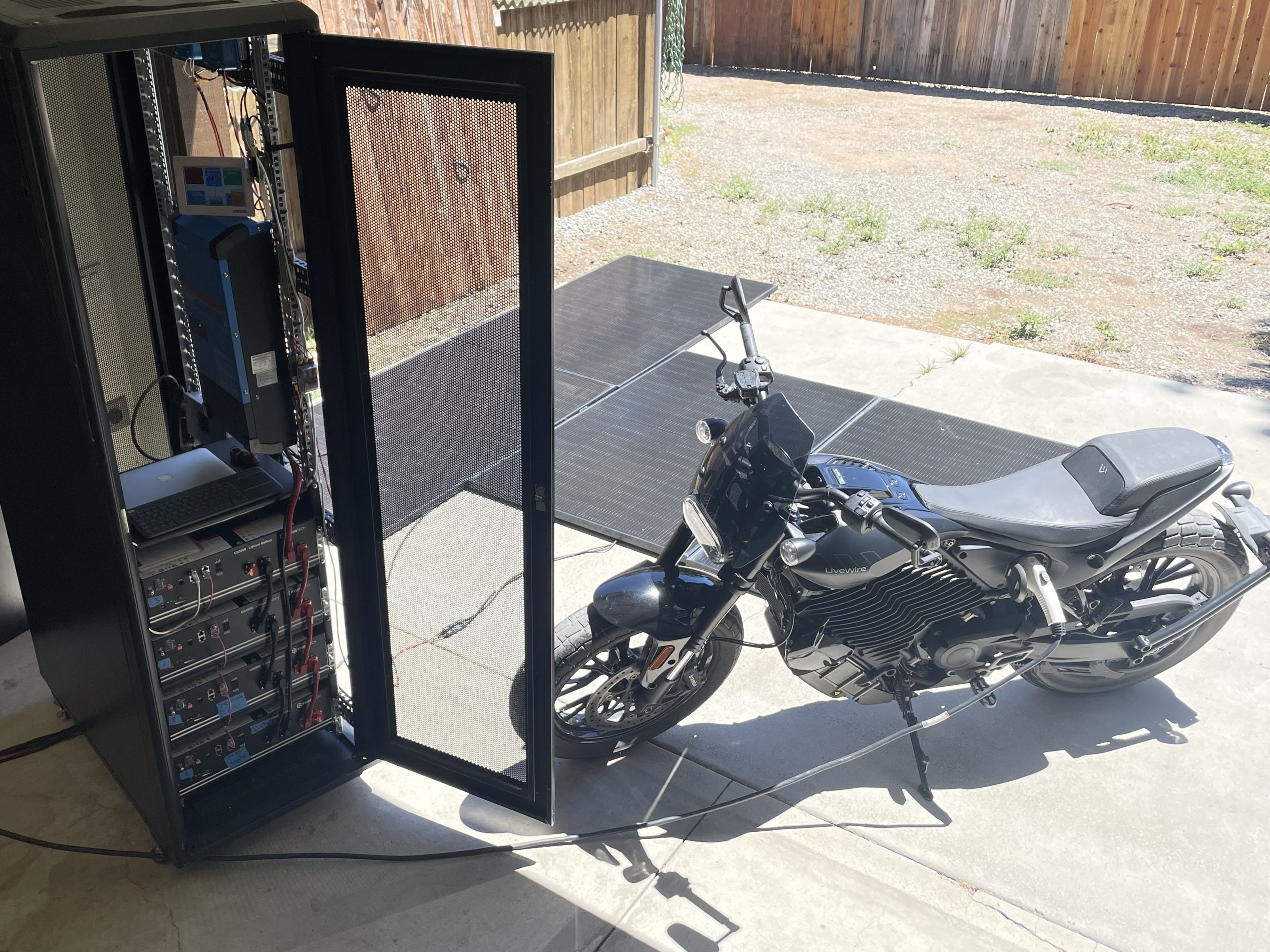
I built this rack as a practical solar-energy platform for charging an electric motorcycle, and using the excess to power my home. The project combines high-current DC distribution, AC protection, lithium battery storage, embedded Linux, CAN communications, and system monitoring in one serviceable package.

Power, control, and communications

System Architecture

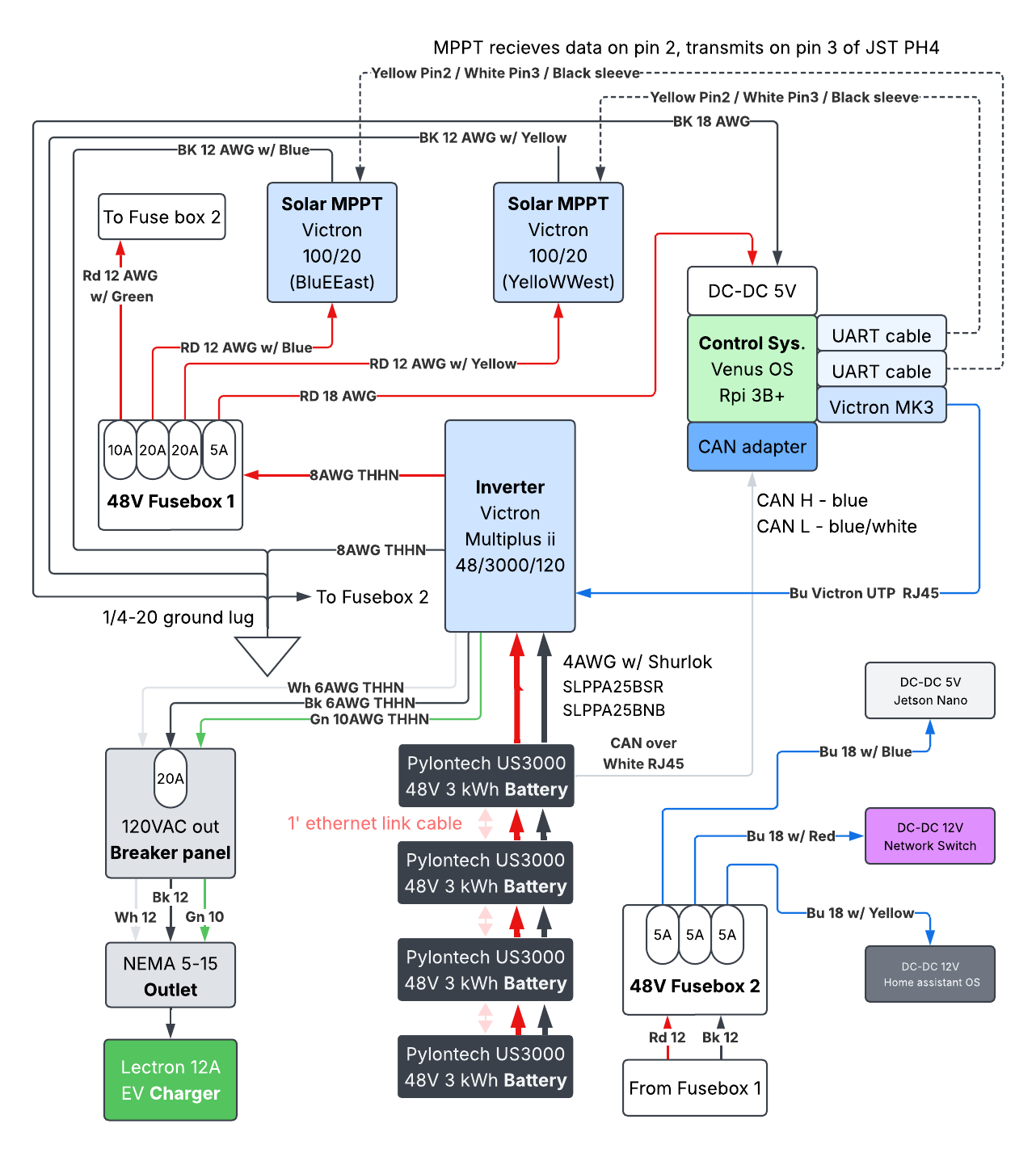
This schematic shows the complete rack architecture: photovoltaic charge control, the 48 V battery stack, inverter and AC output, protected auxiliary power rails, and the communications links that make each major subsystem visible to Venus OS and Home Assistant.

Click the schematic to open the full-resolution drawing.


Architecture Highlights

  • Four Pylontech US3000 modules form the 48 V energy-storage backbone.
  • A Victron MultiPlus-II provides inverter, charger, and AC power-management functions.
  • Two Victron SmartSolar 100/20 MPPTs independently manage the solar inputs.
  • A Raspberry Pi 3B+ running Venus OS collects system data and coordinates communications.
  • CAN links the Pylontech battery-management system to the monitoring stack.
  • Dedicated 5 V and 12 V converters support compute, networking, and Home Assistant hardware.

Design Approach

Star grounding

To eliminate ground loops and provide an excellent ground reference, the 1/4-20 lug connected to the rack rail is the main connection for: AC PE ground, MPPT ground, compute DC-DC converter ground, and Inverter DC negative. This low resistance path allows for the removal of the UART cables' ground wires since the MPPTs are well grounded. An internet search will show many Vicrton VE.direct users recommending an isolated UART adapter, but it is not necessary in this design.

Bring telemetry online before full power

I enabled battery communications and Venus OS monitoring early in commissioning. That allowed me to verify battery voltage, state of health, and read any faults to safely bring up the system. Venus OS allows the BMS to control the MPPT chargers, and stop when the SOC reaches 100%. There were no faults during bringup, but being able to access and control the devices as a system ensured safety.

Keep protection and service points accessible

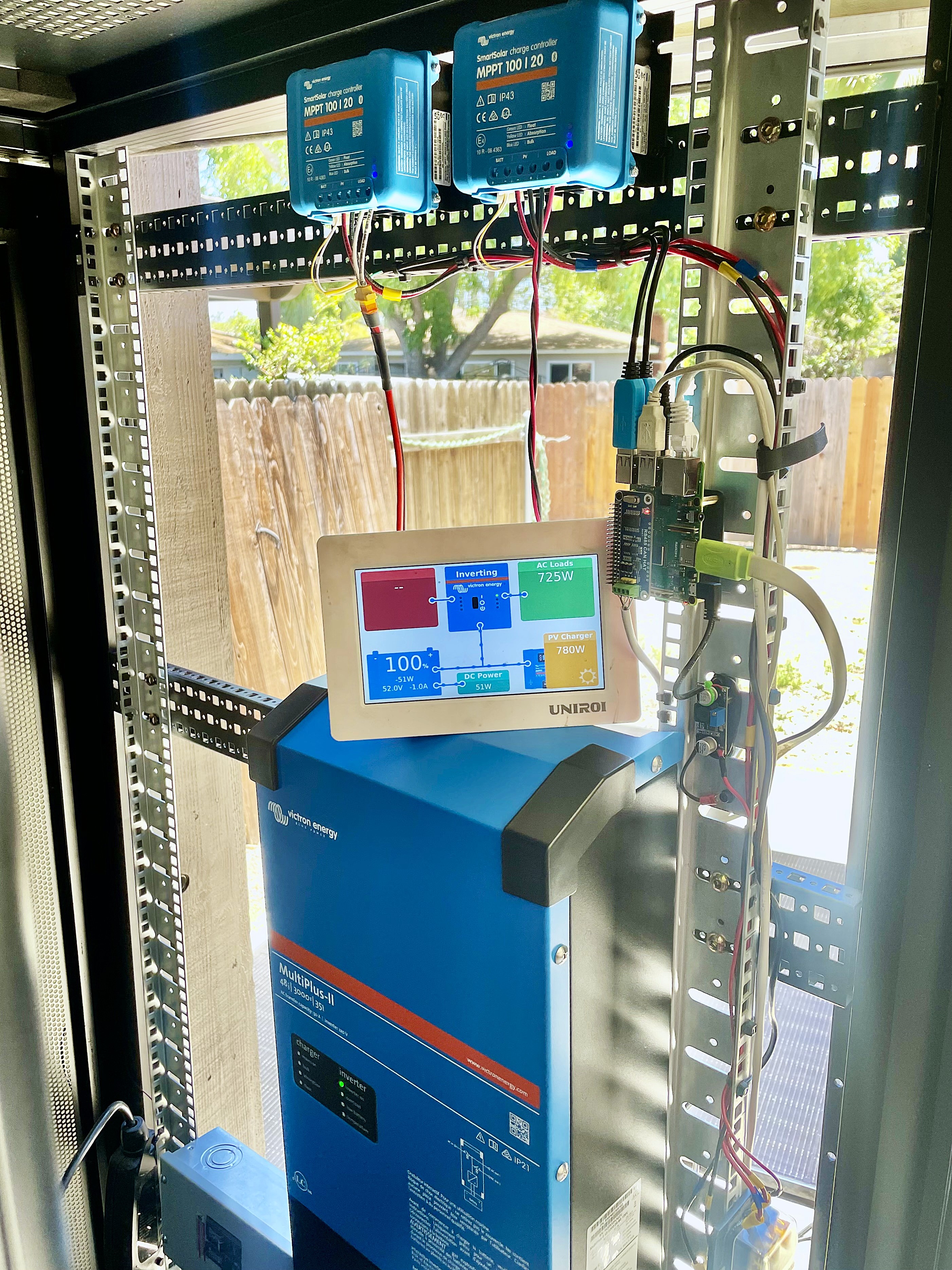
The fuse boxes and breaker panel are part of the visible architecture rather than afterthoughts. The rack is arranged so conductors remain protected while common test and service locations remain reachable during integration work. The built-in shelf and ergonomic heights make working on this system a pleasure. The MPPTs are mounted high so you can see into the terminals for easy installation, the Inverter is at a reasonable height to lift a 50lbs box, and the batteries are mounted low where it's easier to lift. Having access to the rear of the rack through the door makes working on the AC distribution easy. Compared to the tight packaging of a motorcycle, there's so much room to stretch out and be comfy!
Monitoring and Automation

Venus OS runs on a Raspberry Pi 3B+ and serves as the rack's energy-system hub. The Pylontech batteries report over CAN, the MultiPlus-II connects through the Victron MK3 interface, and each SmartSolar controller reports through its UART connection. This creates one coherent view of battery state, charging power, inverter behavior, and system limits. VRM (Victron Remote Monitoring) is accessible via app or local network


Home Assistant runs separately on an Odroid N2. It can use the solar-system data to control discretionary loads, including charging and future energy-management routines, without placing general home automation directly in the safety-critical power-control layer. At 100% charge, a dehumidifier runs to dry the garage air (reducing corrosion) and makes water for the garden

Live system monitoring

Solar Rack Status

The live dashboard works better in its full-screen mobile view.

Open Live Dashboard

Continue exploring

Systems Engineering in Practice

This project brings together power electronics, embedded systems, communications, commissioning, and practical troubleshooting.